The world
City42 is the map — and the stakes
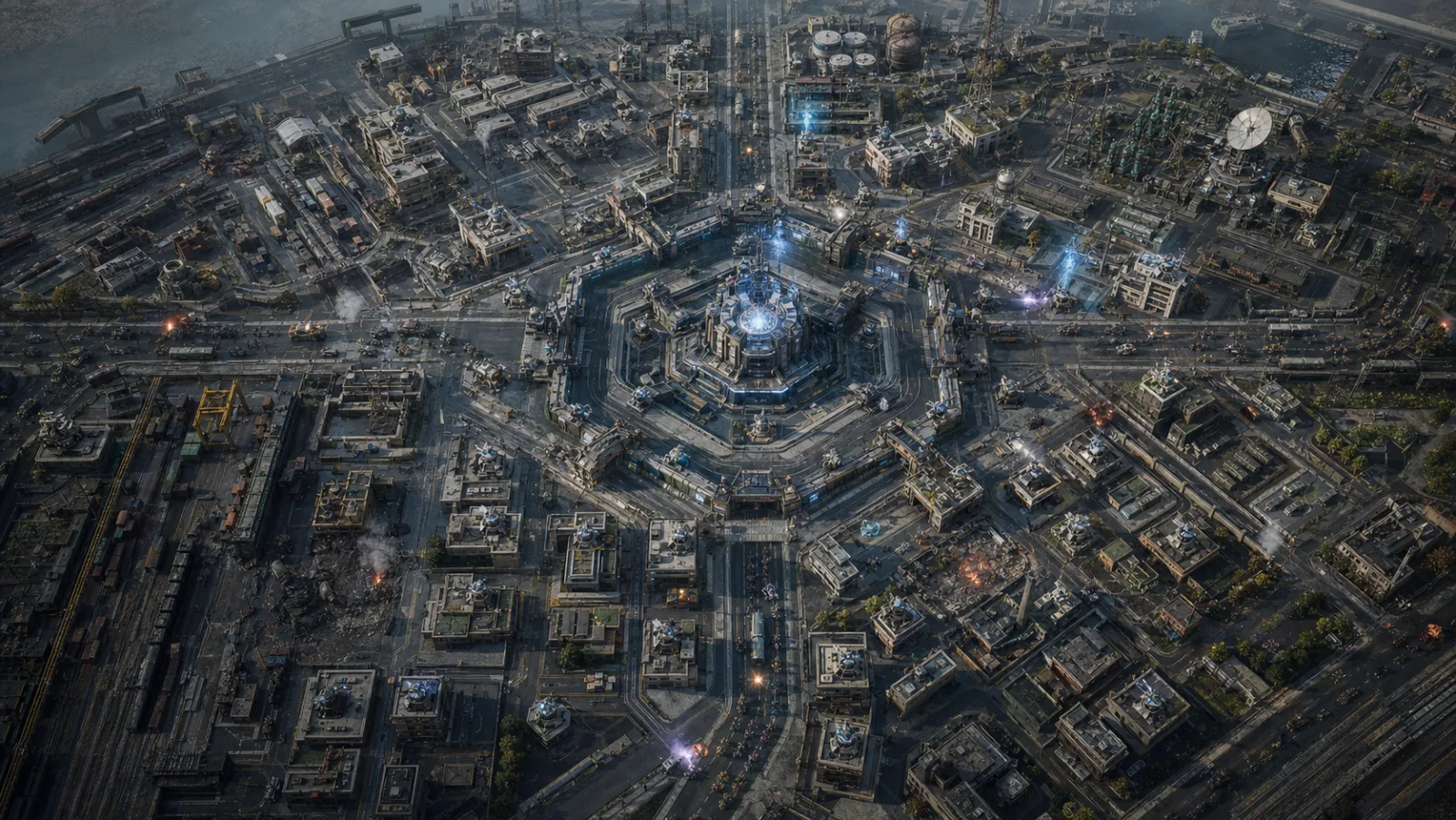
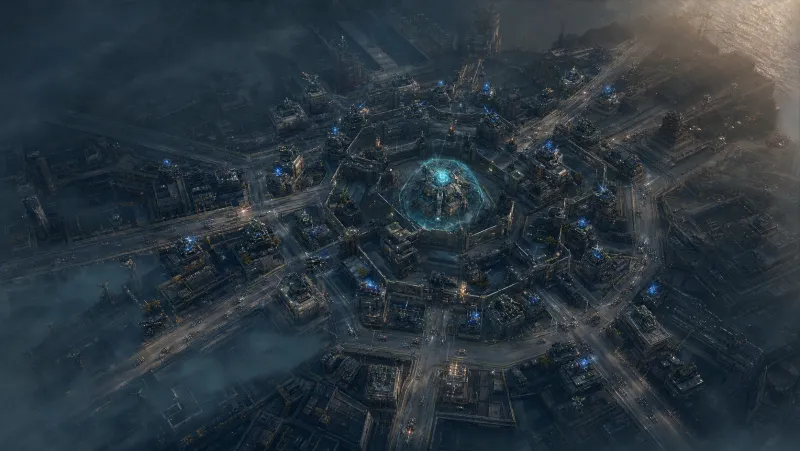
Not a flat lane board. A large multidirectional urban basin of canals, rail yards, elevated highways, substations, and dense rooftops — logical scale 3200 × 2000 — where roads read as roads and the Firewall Core is always unmistakable.
A living basin
Streets, not ribbons
Enemies move through streets, bridges, ramps, and aerial corridors — never randomly through buildings or empty space. Permanent paths are never drawn as bright colored ribbons; you learn the city the way its defenders do, by reading its actual roads.
Camera pan, zoom, minimap, threat focus, and district-state views keep the whole basin readable — on a phone screen or an ultrawide monitor.
Hostile entries
Four directions of pressure
Six winding roads enter from four cardinal directions, then compress into four inner approaches as they near the core.
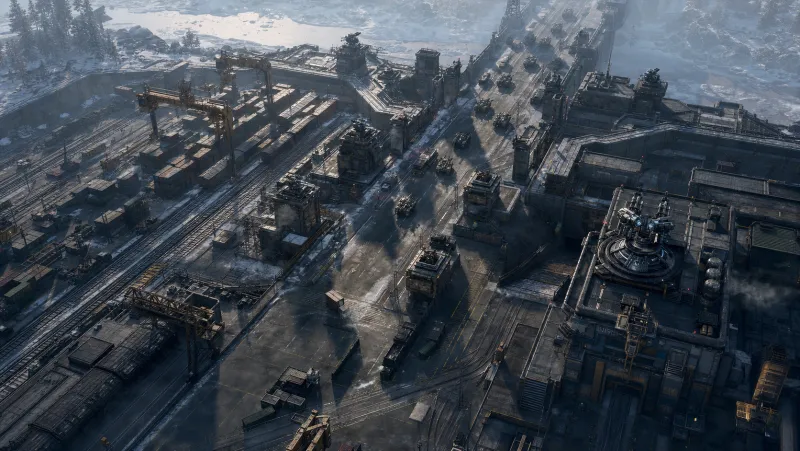
Rail yards
Freight corridors deliver heavy, armored pushes. Crawlers and shield carriers favor the north line.
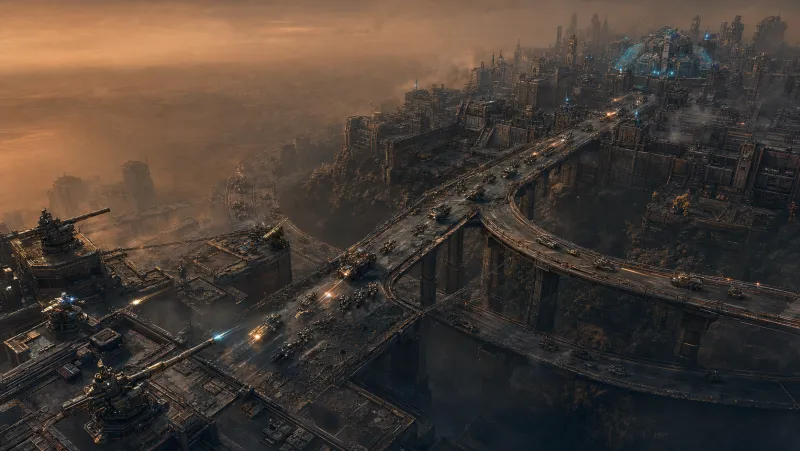
Elevated highway
Fast, wide, and hard to choke. Runner columns build speed on the highway before they hit your first interception zone.
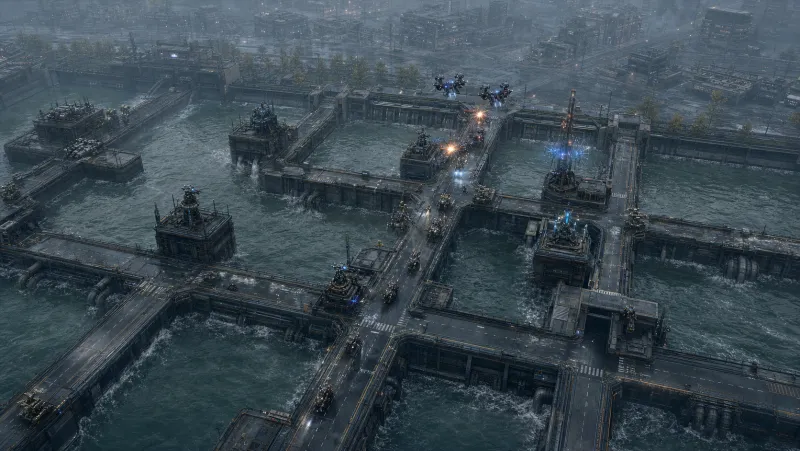
Flood canals
Concrete channels and service roads carry swarms and saboteurs beneath your main sightlines.
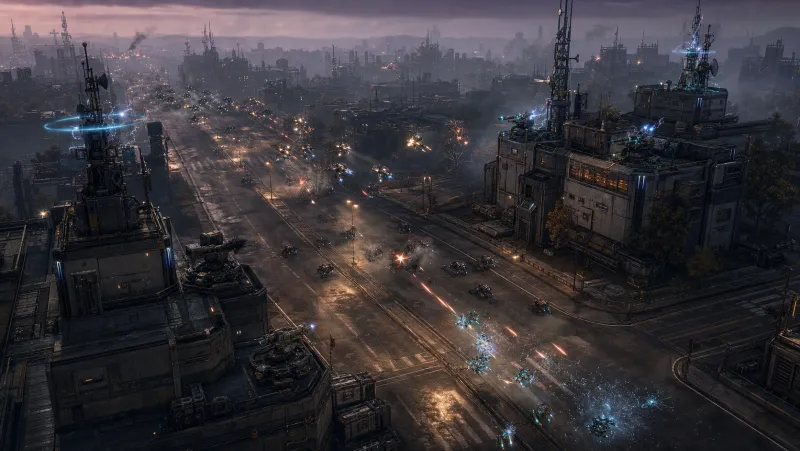
Aerial corridor
Hack drones and strike skimmers ride the eastern skyline. Without flak coverage, the east becomes a free lane.
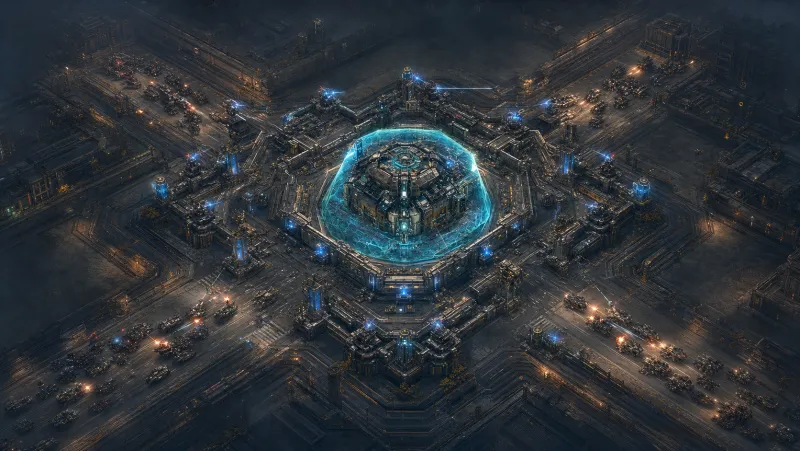
Convergence
Six routes become four approaches
Four major convergence hubs concentrate the offensive as it nears the center. Inner lines are efficient — one anchor can cover several lanes — but a breach there costs far more than a breach at the perimeter.
Thirteen dedicated long-range anchor positions ring the basin. They see far, hit hard, and never cover everything at once.
District states
The city remembers every wave
Each district lives in one of four states. Power decides what your defenses can do — and what you can even see.
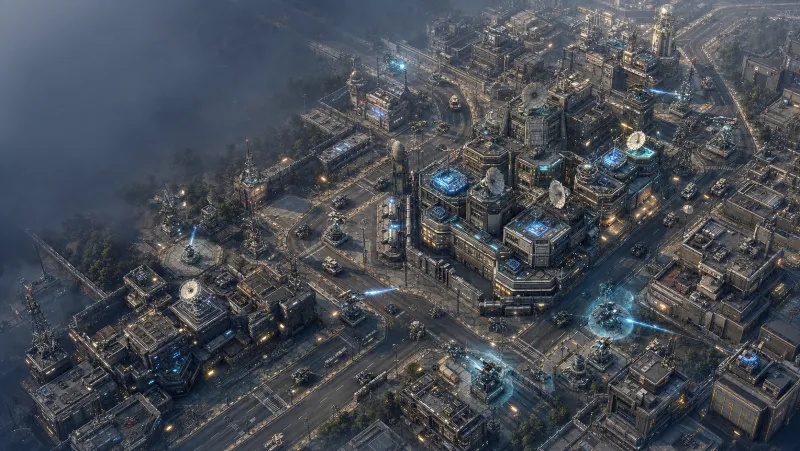
Powered
Full energy budget, full sensor coverage, every defense class available. A powered district is your economy — and the enemy knows it.
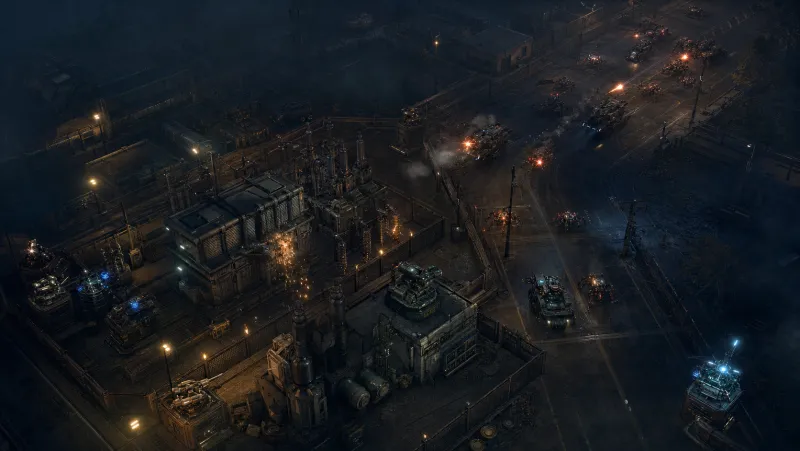
Blackout
Lost substations cut the energy budget. High-drain systems throttle, sensors shrink, and the fight narrows to emergency-lit intersections. Protect the grid or fight blind.
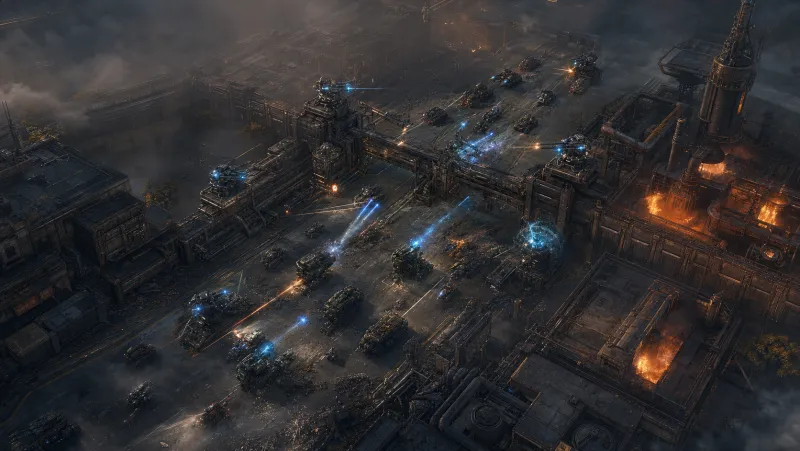
Contested
Active fighting. Placement is restricted, repairs are risky, and every wave held here buys the inner districts time. Losing a contested sector reshapes routes and pressure on the next line.
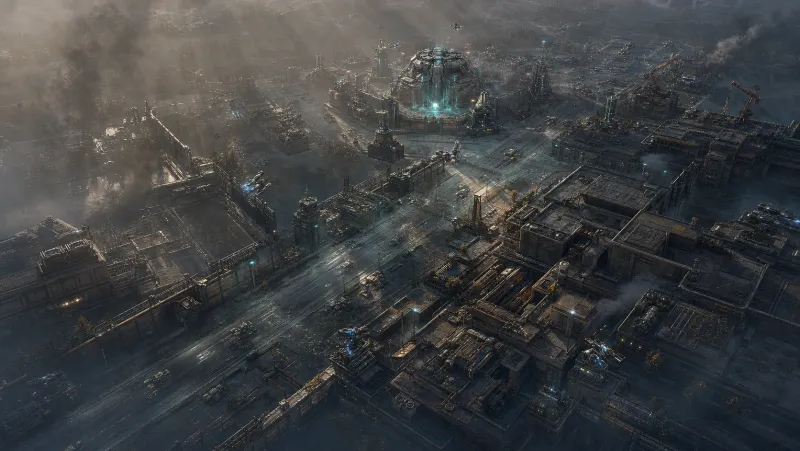
Recaptured
Only the last lost adjacent sector can be retaken — and only after you earn a line-break opportunity. A recaptured district returns scarred: partial power, damaged zones, and a defense grid you rebuild by hand.
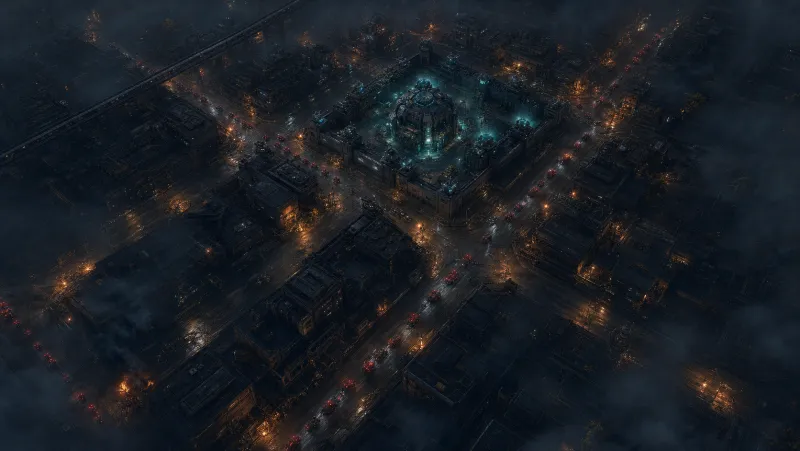
Infrastructure
Power is a front line
Substations, maintenance corridors, and the communications district are not background art — they are objectives. The energy grid decides which defenses run at full capability, and the enemy plans around it.